Skip the Tour Bus: Why Entertainers Are Choosing Daily Live Streams Over Sold-Out Shows
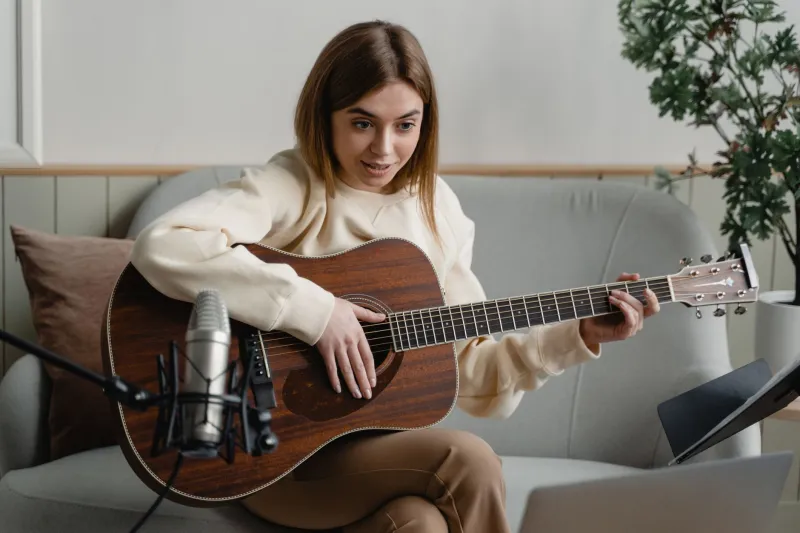
The sold-out tour. The late-night TV appearance. The stadium deal. For generations of American entertainers, these were the milestones that defined a successful career — the proof that you'd made it. But something has quietly shifted in the economics of performance, and the entertainers who noticed it first are now the ones talking about financial stability, creative control, and genuine fan relationships in ways that touring musicians and seasonal TV personalities almost never do.
They're live streaming. Regularly. Often daily. And for a growing number of performers across music, comedy, and sports, it's not a supplement to the traditional career path — it's the replacement.
The Math That Changed Everything
Let's start with the numbers, because the numbers are genuinely surprising.
A mid-tier touring musician — someone who fills 500-to-1,500 seat venues, plays 80 dates a year, has a booking agent and a small crew — might gross between $150,000 and $300,000 annually from touring. After the costs of travel, equipment, crew salaries, venue fees, and the inevitable canceled dates, the actual take-home can be a fraction of that. It's a feast-or-famine model that burns people out fast.
Now consider a musician who streams live five days a week to an audience of 3,000 consistent viewers, 800 of whom pay $7 a month for a membership tier that includes exclusive content, early access, and direct chat interaction. That's $67,200 a year from memberships alone — before merchandise, tip jars, brand integrations, and one-off paid events. And they're sleeping in their own bed every night.
"I did the math in 2022 and I almost fell out of my chair," says one independent singer-songwriter based in Nashville who asked to be identified only by her first name, Renata. "I was making more from my Thursday afternoon streams than I was from a weekend run of three shows in three different cities. And I wasn't exhausted."
Comedians Found This First
If musicians are discovering the streaming pivot now, comedians were there years ahead of them. Stand-up comedy has always been a brutal touring business — drive to the club, perform for a door split, drive home, repeat until famous or broke. The overhead is lower than music, but the grind is relentless and the financial ceiling is low for everyone outside the top tier.
Comedians who started experimenting with regular live stream sets during the pandemic discovered something unexpected: their audiences showed up more consistently online than they had in clubs, and the relationship was fundamentally different. In a club, the comedian performs for whoever bought a ticket that night. Online, the comedian performs for their people — the ones who found them, subscribed, and come back every week.
"My streaming audience knows my references, my running bits, my whole deal," says one Chicago-based comedian who now runs two live stream sets per week alongside occasional club dates. "I can do a callback to something from three months ago and the chat goes wild. You can't do that in a club where half the room has never seen you before."
That depth of audience familiarity enables a kind of creative experimentation that touring rarely allows. When your viewers know you well and show up consistently, you can take risks, try new material, and develop ideas in real time without the pressure of a one-shot performance in front of strangers.
Athletes Are Getting In on It Too
The sports angle is newer, but it's developing fast. Retired and semi-retired athletes — particularly those from niche sports, extreme sports, and combat sports — have discovered that their personal brands translate remarkably well to regular live stream formats. Former pro skaters doing live Q&As and trick tutorials. Retired MMA fighters breaking down fight tape with their audiences in real time. Ex-minor leaguers hosting live baseball analysis shows that out-engage the regional sports networks covering the same teams.
What these athletes share with the musicians and comedians making this pivot is a recognition that their most valuable asset isn't their physical performance — it's their perspective, their personality, and their relationship with a specific community of fans who care deeply about what they know and who they are.
One former professional snowboarder now runs a daily 30-minute live morning show focused on outdoor sports culture, gear reviews, and athlete interviews. He estimates his streaming income — including sponsorships from brands that could never have afforded him during his competition years — has exceeded his best competitive season earnings. "I'm more famous now than I was when I was competing," he says, without a trace of irony. "Because now people actually know me."
The Creative Freedom Dividend
Beyond the economics, the performers we spoke to consistently returned to one theme: creative freedom. The traditional entertainment industry — labels, agencies, networks, tour promoters — extracts a significant creative toll in exchange for its infrastructure. You record what the label thinks will sell. You tour the cities the agent books. You appear on the shows that fit the network's format.
Regular live streaming eliminates most of those gatekeepers. The performer decides what they play, what they talk about, how long they go, and who they invite on. The audience responds in real time, and that feedback loop accelerates creative development in ways that annual album cycles and seasonal TV appearances never could.
"I've written more songs in the last 18 months than in the five years before that," Renata says. "Because I'm performing constantly, getting reactions constantly, and I'm not waiting for anyone's permission to try something new."
What This Means for the Live Events World
None of this means that concerts, comedy clubs, or sports arenas are going away. The live, in-person experience has a dimension that streaming can't fully replicate, and performers who've built their streaming audiences often find that those audiences are more likely to show up for in-person events — not less. The daily stream builds the relationship; the live event celebrates it.
What's changing is the power dynamic. Entertainers who've built consistent streaming audiences are no longer dependent on the traditional infrastructure to sustain their careers. They come to the table with leverage — an engaged, proven fan base that follows them regardless of venue or network. That changes every negotiation they'll ever have.
For the entertainment industry at large, the message is becoming impossible to ignore: the daily live stream isn't a consolation prize for performers who couldn't make it on the traditional circuit. For a growing number of artists, athletes, and comedians, it's the main event — and the tour bus is optional.