Unfiltered and Unstoppable: Why Live Daytime Streams Are Winning the Trust War Against Viral Content
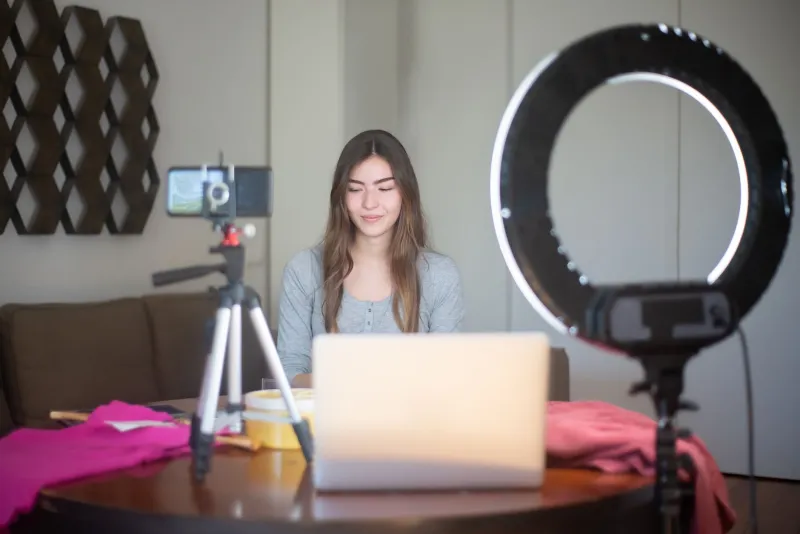
Let's be honest about what a viral video actually is. It's a piece of content that has been optimized, trimmed, sound-designed, captioned, and in many cases A/B tested before it ever reaches your feed. The "spontaneous" laugh is on take four. The "candid" moment was staged with a ring light and a second camera. The relatable struggle was workshopped by a team of three and a social media manager.
There's nothing inherently wrong with any of that. Production craft is real craft. But audiences — particularly younger ones — are getting very good at sensing it. And increasingly, what they're doing when they sense it is leaving.
Where are they going? A lot of them are showing up to daytime streams.
The Smell Test Generation
Gen Z didn't grow up watching television the way their parents did. They grew up online, surrounded by influencer culture from the time they were old enough to hold a tablet. They've seen the before-and-after of creator authenticity so many times that they've developed a finely tuned instinct for when something feels manufactured.
Millennials, meanwhile, have been through enough social media cycles to have developed their own brand of digital exhaustion. They remember when Instagram was just photos of your lunch, before it became a curated lifestyle competition. They've watched platforms that promised realness become engines of aspiration anxiety.
Both groups are now actively seeking content that doesn't feel like it's trying to sell them something — including a version of the creator's life that's been polished beyond recognition. That appetite is exactly what daytime streaming feeds.
Why Live Breaks the Formula
Here's the thing about going live: you can't fix it in post. The awkward pause stays awkward. The wrong word doesn't get replaced. The internet cutting out mid-sentence, the dog barking in the background, the streamer losing their train of thought and laughing about it — all of it stays, in real time, for everyone watching.
This is what makes live daytime streams so disarming. They're structurally incapable of being the kind of polished, algorithm-optimized content that younger audiences have learned to distrust. The format itself is the authenticity guarantee.
When a daytime streamer fumbles an explanation, corrects themselves, and moves on, viewers don't cringe — they lean in. That moment of imperfection is proof that what they're watching is real. And in a media landscape where "real" has become an increasingly rare and valuable commodity, that proof is worth more than any production budget.
The Algorithm Problem
Viral content, by definition, is built to perform for algorithms before it performs for humans. Hooks in the first three seconds. Retention-optimized pacing. Trending audio. Strategic hashtag placement. These aren't just stylistic choices — they're survival requirements in a platform ecosystem that rewards engagement metrics above all else.
The result is a kind of content arms race where every creator is chasing the same signals, producing content that looks increasingly similar and feels increasingly hollow. Scroll through TikTok for twenty minutes and you'll notice it: the same formats recycled, the same transitions, the same artificially urgent voiceovers. It's entertaining, sure. But it's not particularly human.
Daytime streaming exists almost entirely outside that arms race. A live stream doesn't have a hook. It doesn't have retention optimization. It just has a person, a camera, and whatever happens to unfold between them and their audience that afternoon. That structural difference isn't a limitation — it's a feature.
Flaws as Currency
One of the most interesting shifts happening in creator culture right now is the revaluation of imperfection. For years, the aspiration was polish. Better cameras, better lighting, better editing. Creators invested heavily in production quality because that's what separated the professionals from the amateurs.
That's still true in some contexts. But among the audiences most coveted by platforms and advertisers — 18-to-34-year-olds with disposable income and strong brand opinions — there's a growing counter-movement. These viewers aren't impressed by production quality. They're suspicious of it.
A daytime streamer who spills their coffee on camera and laughs it off earns more trust in that moment than a perfectly produced brand video earns in three minutes. The spilled coffee is real. The brand video is a performance. Audiences know the difference, even when they can't articulate exactly why.
The Afternoon Advantage
There's an additional layer to this that's specific to the daytime format. Afternoon streams tend to attract creators who are doing this because they love it — not because they've calculated it as the optimal path to virality. The daytime audience is smaller and more niche than primetime. There's no illusion of overnight fame in a 1 PM stream.
That self-selection produces a particular kind of creator: one who shows up because the community matters to them, not because the metrics demand it. Audiences can feel that motivation, and it deepens the trust they extend to those creators in ways that manufactured relatability never achieves.
What This Means Going Forward
The content authenticity war isn't going away. If anything, as AI-generated video and algorithmically-optimized scripts become more prevalent, the contrast between manufactured content and genuine live interaction will grow starker. The audiences that have already migrated toward daytime streaming will have stronger reasons to stay.
For creators, the message is clear: the path to lasting audience trust isn't through better production — it's through more presence. Show up live. Let things be messy. Talk to your viewers in real time. Be findable at a consistent hour, on a consistent schedule, doing something you actually care about.
That's the formula daytime streaming has been proving out quietly for years now. It doesn't go viral. It doesn't trend. But it builds something that viral content never quite manages: an audience that actually believes you.