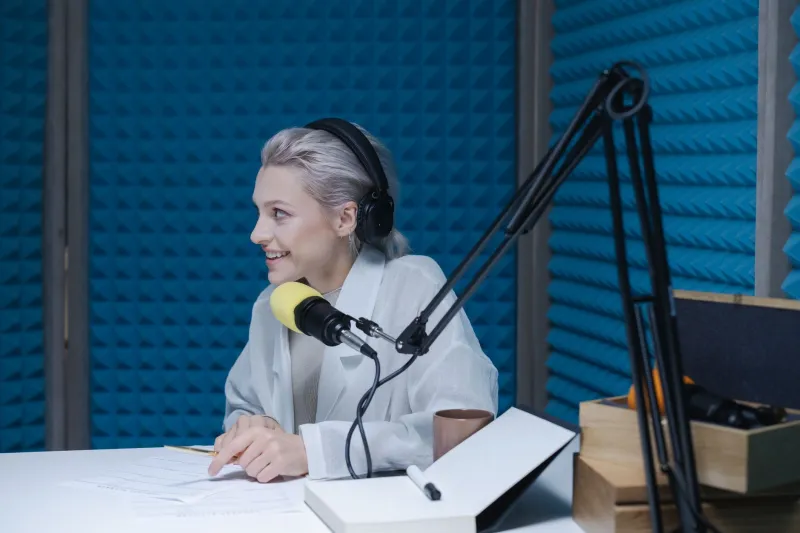
Front Row From Your Living Room: How Broadway Talent Is Taking the Stage Online

For most of American history, if you wanted to catch a Broadway show, you had one real option: get yourself to New York City. Buy the tickets, book the hotel, navigate Midtown Manhattan, and hope the lead wasn't out sick on the day you chose. For millions of theater fans living in Boise, Birmingham, or Bozeman, that trip was a once-in-a-decade luxury — if it happened at all.
But something has quietly shifted. Broadway performers, regional theater companies, and even scrappy off-Broadway troupes are increasingly turning to live streaming to bring their work directly into people's homes. And the timing? It's matinee hours — that sweet afternoon window where engaged audiences are ready to settle in and actually watch something meaningful.
The Pandemic Cracked Open a Door That Isn't Closing
When COVID-19 forced Broadway to go dark in March 2020 — a shutdown that lasted a brutal 18 months — theater artists didn't exactly sit still. They improvised. Zoom readings, Instagram Live performances, and YouTube concerts became the lifeline connecting performers to their audiences. What started as survival mode turned into something more interesting: a genuine discovery that digital performance had its own energy, its own intimacy.
When the lights came back on, many performers kept streaming. Not as a replacement for the stage, but as a complement to it. The audience was there. The appetite was real. And the technology had gotten good enough to actually do it justice.
"There's an audience in Des Moines who knows every word of every Sondheim musical and has never been able to afford a Broadway trip," one performer noted in a recent interview with a theater publication. "Why would I not want to perform for them?"
What These Streams Actually Look Like
The format varies pretty widely depending on who's doing it and what they're going for. Some productions offer full live-streamed performances — ticketed events with real production value, multiple camera angles, and professional audio. Think of it less like a shaky phone recording and more like a front-row seat with better sightlines than you'd actually get in the theater.
Others lean into the behind-the-scenes angle. Understudies — long one of Broadway's most fascinating and underexposed roles — have found a surprisingly enthusiastic online following by streaming their preparation process, vocal warm-ups, and the nerve-wracking experience of going on for a lead role with little notice. That raw, unfiltered content hits differently than a polished performance, and audiences are eating it up.
Then there are the hybrid events: a live Q&A after a recorded performance, a virtual stage door where fans can actually interact with cast members in real time, or a masterclass-style stream where a working actor walks viewers through a scene from audition to opening night.
Platforms like Stellar, BroadwayHD, and even Twitch have all seen theater content grow in their ecosystems. And newer live streaming platforms built specifically for performance — including those focused on daytime programming — are becoming natural homes for this kind of content.
Democratizing the Orchestra Section
Let's be honest about what Broadway tickets cost. A premium seat for a major production can run $200, $300, or more. Add travel and lodging for anyone outside New York, and you're looking at a serious financial commitment just to see a single show. That reality has always created a two-tier theater world: those who can access it, and those who admire it from a distance.
Live streaming doesn't erase that gap entirely, but it meaningfully narrows it. A ticketed live stream might run $15 to $35 — roughly the price of a movie ticket — and you're watching from your couch with snacks you actually like. For disabled audience members, parents of young kids, or anyone with mobility challenges, that accessibility isn't just convenient. It's transformative.
Theater educators in smaller cities have also picked up on this. High school drama teachers are now licensing streams for classroom use, giving students in rural communities a direct window into professional performance that a textbook simply can't replicate.
A New Revenue Stream for a Still-Recovering Industry
Broadway's financial recovery post-pandemic has been uneven, to put it charitably. Some productions have roared back. Others have struggled to fill seats consistently, particularly for mid-week and matinee performances. The economics of live theater remain notoriously fragile — one bad review, one slow sales week, and a show can spiral toward closing.
Digital revenue doesn't replace ticket sales, but it adds a layer of financial cushion that the industry didn't really have before. A live-streamed matinee that sells 2,000 virtual tickets at $25 each generates $50,000 in a single afternoon — without requiring those audience members to physically be in the building. For smaller companies and touring productions, that math is genuinely exciting.
Beyond single-event tickets, some performers are building subscription models. A monthly membership might get fans access to exclusive streams, early ticket access, and direct engagement with the artists. It's the theater equivalent of a Patreon, and it creates a steadier income floor in an industry where employment is notoriously unpredictable.
The Afternoon Advantage
There's something particularly fitting about the matinee framing here. The traditional Broadway matinee — a Wednesday or Saturday afternoon performance — has always served a specific audience: families, tourists, older theatergoers, and anyone who couldn't make an evening show work. It was never the "cool" performance, but it was often the most joyful one.
Digital matinees carry that same energy forward. The afternoon streaming slot aligns naturally with remote workers taking a lunch break, stay-at-home parents during nap time, retirees looking for something genuinely stimulating, and students with flexible schedules. It's not prime time — and that's kind of the point. The daytime audience is engaged precisely because they've chosen to be.
Platforms that specialize in daytime live entertainment are particularly well-positioned to become the go-to home for this content. The audience is already there. The habit is already forming.
What Comes Next
The trajectory here feels pretty clear. As production quality improves and more performers embrace the format, live-streamed theater is going to become a standard part of how the industry operates — not a niche experiment or a pandemic holdover, but a genuine second stage.
That doesn't mean the physical theater experience goes anywhere. There's still nothing quite like being in a room with live performers, feeling the energy of an audience around you, and experiencing a story unfold in real time and real space. Broadway isn't going virtual.
But for the theater lover in Tulsa who hasn't made it to New York in six years, or the college student who can't afford orchestra seats, or the superfan who wants to watch a show for the fifth time without buying another ticket — the stream is waiting. Curtain up.